What is Solar Roofing?
Solar roofing uses roof-integrated solar shingles that replace asphalt shingles while generating electricity. Unlike rack-mounted solar panels, solar shingles sit flush with the roof and function as both a roofing system and an energy system, making them ideal for homeowners planning a roof replacement who want a clean, low-profile solar solution.
Solar energy doesn’t have to compromise your home’s aesthetic. As a certified installer of CertainTeed Solstice Solar Shingles, Sun Vault Roofing provides a revolutionary, integrated solar roofing system. It offers the superior durability of a high-end residential roof with the added benefit of clean, renewable energy production, seamlessly blending beauty and functionality right into your roofline.
Seamless Design, Smart Energy Production
Unlike conventional rack-mounted solar systems, solar shingles lie flush with your roofline to create a sleek, modern finish that’s as beautiful as it is functional. When you replace your roof with us, you get a beautiful new roof and a high-performance energy system in one integrated installation.
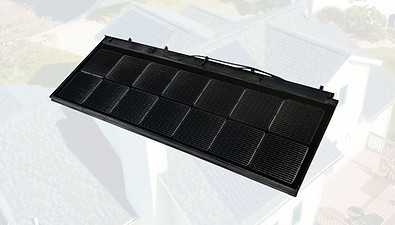
Powering Your Home with CertainTeed Solstice
We rely on the CertainTeed Solstice system for its superior aesthetics and proven performance. These shingles are designed to deliver exceptional power generation while providing long-term roof protection and the best manufacturer warranties in the industry.
Built for Wisconsin Weather & Performance
Your solar roof needs to withstand the extreme conditions of the Midwest. Our installations are designed to meet or exceed strict snow load, hail impact, and wind resistance requirements.
Hail and Impact Resistance
Built with durable materials tested for harsh impacts. Certified UL Class 3 for impact resistance (same as most asphalt shingles)
Optimal Snow Shedding
The integrated design helps shed snow more efficiently than typical solar panel mounting systems.
Ice Dam Protection
Proper underlayment and installation are vital to protecting your investment during severe winter weather

Is a Solar Roof Right for You?
Solar Shingles vs. Conventional Solar Panels
Solar shingles and conventional solar panels both generate electricity, but they are designed for different situations.
Solar shingles replace asphalt shingles as part of a full roof replacement. They function as both a roofing system and a solar energy system, creating a clean, low-profile appearance that blends seamlessly with the rest of the roof. Solar shingles are typically the best choice when a roof is already due for replacement and homeowners want to combine roofing and solar into a single, long-term investment. Many homeowners first discover solar roofing through the Tesla Solar Roof. Solstice solar shingles offer a similar concept: clean energy generated directly from the roof itself.
Conventional Solar Panels are mounted on racks above an existing roof. They do not replace roofing materials and are often the better option when a roof is newer and in good condition, or when homeowners are primarily focused on maximizing energy production without replacing their roof.
Most Wisconsin homes are a good fit for rooftop solar in some form. As a full-service roofing and solar contractor, Sun Vault Roofing installs both systems and helps homeowners choose the option that best fits their roof condition, energy goals, and long-term plans.

What homeowners say about our solar roofing work
Alan Pitas, Evansville WI homeowner
"Sun Vault Roofing replaced our hail damaged roof with solar shingles. They provided excellent service and attention to detail. We are currently generating electricity from our new roof. We highly recommend them."


Why Choose Sun Vault Roofing for Your Solar Shingle Installation?
✅ Certified CertainTeed Installers: We are trained and certified to install the Solstice system to manufacturer specifications, ensuring warranty validity and performance.
✅ One-Stop Contractor: We are a full-service roofing contractor, meaning we handle the roof replacement, the solar install, and the electric hook-up, no need to hire multiple companies.
✅ Local Experts: We have years of experience integrating solar technology into Wisconsin homes.
✅ Unified Team: Solar roofing starts with the same fundamentals as asphalt roofing: impeccable quality, attention to detail, and customer service. Let us take care of all your roofing and solar needs with one team.
Solar Roofs aren't right for everyone (yet)
Integrated solar shingles are our passion, but they are not the right fit for every home.
For some homeowners, the upfront cost of replacing a roof and adding solar at the same time may not make sense. Others may have shading, roof orientation, or timing considerations that make waiting a better option.
That is perfectly fine.
At Sun Vault Roofing, we are roofers first. Most of the inspections we perform are for conventional asphalt roofs, and we take the same pride in a high-quality roof replacement whether it includes solar shingles or not. Both systems rely on the same fundamentals: proper decking, underlayment, flashing, ventilation, and craftsmanship.
If solar is not the right move today, a new asphalt roof can always be paired with conventional solar panels later. In fact, installing solar panels a few years after a roof replacement is a very common path for homeowners.
Our goal is simple: help you choose the roofing solution that makes the most sense for your home, your budget, and your long-term plans.
Our mission is to help bring solar roofing into the mainstream. As more homes adopt integrated solar, economies of scale will drive costs down, just as we have seen with traditional solar panels over the past decade.
Frequently asked questions
Do you put solar roofs on homes that are under construction / new construction?
Yes! We install solar roofing on new construction homes across Wisconsin and would love to partner with you. New builds are often ideal for solar because we can design the roof layout and solar roofing installation together, without working around old materials or mature trees. If you are building a home and want an integrated solar shingle roof instead of panels added later, email info@sunvaultroofing.com and we will walk you and your builder through the process.
Will you install conventional solar panels on top of existing roofs?
Yes! While integrated solar shingles are our flagship product, we also design and install conventional roof-mounted solar panels when that is the better fit. As a solar roofing contractor, we can compare solar shingles vs conventional solar panels for your roof, explain the cost and performance tradeoffs, and help you choose the system that best matches your home and long-term plans.
Are solar shingles less efficient than conventional solar panels?
Solar shingles are only about 2 percent less efficient than conventional solar panels. That difference is smaller than the year-to-year changes in sunshine most homes already see, so it is trivial for most homeowners. When you compare solar roof shingles vs solar panels, the better choice often comes down to aesthetics, roof age, and long-term plans rather than a small efficiency gap.
Learn more in our blog post: are conventional panels or solar shingles right for you?
Does installing solar shingles replace my entire roof?
Yes. In an integrated solar roofing installation, solar shingles are installed as part of a full roof replacement. They replace asphalt shingles in select areas of the roof and function as both your roofing material and your solar energy system. If your roof is newer and not due for replacement, we may recommend conventional rack-mounted solar panels instead.
How long does a solar shingle roof installation take?
A solar shingle installation typically takes slightly longer than a standard roof replacement because it includes both roofing and electrical work. Most residential projects are completed over 1-3 days, depending on roof size, shape, and system complexity. We provide a clear timeline before work begins and coordinate all trades so the process is smooth and predictable.
Is a solar roof right for my home?
A solar roof is a great option if your roof is due for replacement and you want to combine a new roof with clean energy production in a single project. Solar shingles work best on homes with good sun exposure and long-term ownership plans. During a free inspection, we evaluate your roof’s age, structure, orientation, and energy usage to determine whether solar shingles are the right fit or if a conventional panel system would make more sense.
What’s the difference between solar shingles and conventional solar panels?
Solar shingles replace part of your roofing material and generate electricity as part of a full roof replacement, creating a seamless, low-profile appearance. Conventional solar panels are mounted on top of an existing roof and are typically the better option when the roof is newer and in good condition. If you’re already planning a roof replacement, solar shingles allow you to combine roofing and solar into one integrated project with a beautiful, aesthetic outcome.
Are solar shingles built for Wisconsin weather?
Yes. CertainTeed Solstice Solar Shingles are engineered to withstand harsh Midwest conditions, including heavy snow loads, high winds, and hail. They carry the same impact resistance ratings as premium asphalt shingles and are installed with proper underlayment and waterproofing to protect against ice dams and freeze–thaw cycles common in Wisconsin.
Do solar shingles affect my roof warranty?
When installed correctly by a certified contractor, solar shingles do not compromise your roof warranty. As a CertainTeed–certified installer, we follow manufacturer-approved installation methods that preserve both roofing and solar warranties. This ensures your roof and energy system are protected for the long term.
Do solar inspections and installations require attic access?
Yes. Solar roofing inspections and installations typically require attic access. This allows us to safely route wiring, install required electrical components like remote shutdown receivers, verify structural details, and evaluate ventilation. Attic access is an important part of ensuring the system is code-compliant, safe, and properly integrated into your home. We’ll always explain what’s needed ahead of time and answer any questions before work begins.
Will a solar shingle roof affect my homeowners insurance?
It can. In at least one recent Sun Vault Roofing project, a homeowner saw their insurance premium drop 39% after updating their policy to reflect a newly replaced roof with integrated, impact-rated solar shingles. While insurance outcomes depend on the home, materials, location, and carrier, solar shingle roofs often combine a full roof replacement with Class 4 impact resistance, which insurers may view differently than an older asphalt roof. Homeowners should always review updated roof details directly with their insurance provider.
How do you maintain solar shingles on a roof?
Solar shingles require very little maintenance beyond what’s already recommended for a standard asphalt roof. That typically means an annual roof inspection and periodic gutter cleaning, especially once a roof is more than five years old. One of the biggest advantages of solar shingles is their low ongoing maintenance compared to traditional rack-mounted solar panels.
Homeowners should not attempt to clean solar shingles themselves. Proper cleaning requires specialized equipment and water pressure controls to avoid damaging the shingles or electrical components. Snow removal is also not recommended. The small potential increase in winter production is generally not worth the risk of damaging the system, especially since most solar energy is produced outside of the winter months.
What are the benefits of solar shingles in Madison?
For Madison homeowners, solar shingles offer a combination of strong aesthetics, low maintenance, and long-term value. Because the solar cells are integrated directly into the roof, they create a clean, low-profile appearance that many homeowners prefer over traditional panels. This often translates into higher resale value and broader buyer appeal.
Solar shingles also require less ongoing maintenance, which means fewer service calls and fewer long-term headaches. When combined with energy savings, incentives, and improved curb appeal, many homeowners see a higher overall return on investment compared to conventional solar options.
Are solar shingles eco-friendly?
Yes. A large portion of the environmental impact of solar systems comes from material manufacturing and transportation. Solar shingles use significantly fewer materials than traditional solar installations because they don’t require steel racks, rails, or mounting hardware, while still producing nearly the same amount of energy.
In addition, when solar shingles are installed as part of a roof replacement, old asphalt shingles are recycled rather than sent to a landfill. This combination of reduced material use and clean energy generation makes solar shingles an environmentally responsible option for many homeowners.
Do you install Tesla solar tiles?
At this time, Tesla solar tiles have limited availability and, to our knowledge, have not been widely offered or supported in Wisconsin in recent years. Instead, we install CertainTeed Solstice Solar Shingles, a proven solar roofing system manufactured by CertainTeed.
CertainTeed has over 120 years of experience in roofing materials and backs its solar shingles with established manufacturing, warranty, and distribution support.
Are solar roofs compatible with Tesla batteries or other home batteries?
Yes. Solar roofs, including solar shingles, are compatible with battery storage systems such as Tesla Powerwall and other leading home battery options. The solar shingles generate electricity the same way other solar systems do, allowing excess energy to be stored for later use or backup power.
Battery storage can be useful for homeowners who want outage protection, time-of-use optimization, or greater energy independence. During your solar consultation, we can help evaluate whether battery storage makes sense based on your usage patterns, outage frequency, and long-term goals.
What is "hidden solar"?
“Hidden solar” usually refers to solar systems designed to blend into the roof rather than sitting on top of it. Solar shingles are one of the most common hidden solar options because the solar technology is integrated directly into the roofing material.
Are solar shingles noticeable from the street?
One of the main advantages of solar shingles is that they blend into the roof.
Unlike conventional solar panels that sit on top of the roof, solar shingles are integrated directly into the roofing system. From many viewing angles, they look similar to dark asphalt shingles. Depending on the slop of your roof, sometimes they may not be visible at all.
Many homeowners choose solar shingles specifically because they want the benefits of solar energy without the look of traditional panels.
Do you install solar shingles on top of asphalt shingles?
No. Solar shingles are installed as part of a full roof replacement or new roof build.
Integrated solar roofing systems like the CertainTeed Solstice system are designed to replace the existing roofing material on the sections of the roof where solar will be installed. During install, the roof deck is exposed, underlayment is installed, and then the solar shingles and surrounding asphalt shingles are installed together as one integrated roofing system.
Installing solar shingles over existing shingles would compromise the roofing system and is not recommended by manufacturers.
If your roof is still relatively new and you want to add solar without replacing it, conventional rack-mounted solar panels may be a better option.
Do solar shingles cover the entire roof?
Usually, no.
Most solar shingle systems are installed only on the roof planes that receive the best sunlight, typically south-, east-, or west-facing sections. The rest of the roof is completed with standard asphalt shingles that match the solar shingles visually.
This approach keeps costs lower while still producing the energy your home needs.
In some cases, homeowners choose to install solar shingles across a larger portion of the roof for aesthetic reasons, but most installations focus only on the areas that produce the most solar energy.
Are solar shingles compatible with Tesla Powerwall or other batteries?
Yes, solar shingles produce standard solar electricity that can be paired with most modern home battery systems, including Tesla Powerwall and other energy storage solutions.
The solar shingles generate DC electricity, which is converted through the solar inverter into usable power for your home. If a battery system is installed, it can store excess energy produced during the day for use at night or during outages.
Battery compatibility ultimately depends on the inverter and electrical design of the system, but the solar shingles themselves do not limit battery options.
If energy storage is part of your long-term plan, we can design the system to accommodate it from the start or add it later.
What is the difference between a Tesla Solar Roof and your solar shingles?
Both systems generate electricity directly from the roof, but they are built differently. The Tesla Solar Roof replaces the entire roof with proprietary glass tiles, including both solar and non-solar tiles designed to match.
Solar shingle systems such as CertainTeed Solstice integrate solar modules into a conventional asphalt roofing system, with solar installed only on the roof areas that receive the most sun.
Tesla Solar Roof installation is currently limited in many areas, including Wisconsin, while solar shingles can be installed by certified roofing contractors. Tesla systems also tend to cost significantly more because the entire roof is made from specialized tiles.
How long have solar shingles been around?
Solar shingles are part of a category of technology called building-integrated photovoltaics (BIPV), where solar cells are built directly into building materials like roofs, siding, or facades. Early BIPV concepts date back several decades, and modern solar shingles became commercially available in the mid-2000s.
CertainTeed introduced one of the early residential solar roofing systems, the Apollo solar shingle, in the late 2000s. Today’s systems, such as CertainTeed Solstice, are newer generations of the same idea: generating electricity directly from the roof while functioning as part of the roofing system itself.
Do solar shingles increase my home's resale value?
Yes. Zillow found homes with solar sold for 4.1% more on average. But that's an older national number that assumes conventional, rack-mounted panels. Newer analysis puts the premium closer to 7%, with premium integrated systems sitting at the top of that range. Ownership matters most - owned systems add value while leases and PPAs often don't, and every system we install is owned by the homeowner. Solar shingles go a step further: they look like a high-end roof rather than equipment bolted on top, which broadens buyer appeal and supports appraisal value. And in a market like Madison, where buyers place a strong soft value on sustainability, that premium tends to land harder than the national average suggests.


