How Does Shingle Color Affect Roof Temperature and Efficiency?

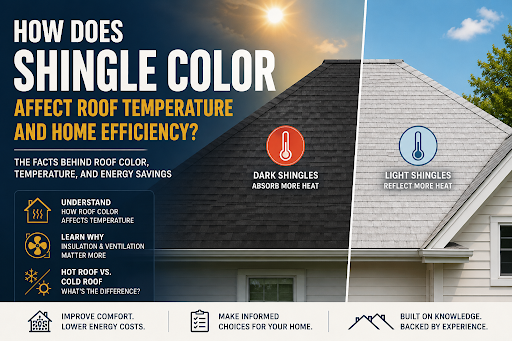
There is an assumption that choosing a lighter or darker roof color will dramatically affect your energy bill. While shingle color does affect how hot a roof gets in direct sunlight, the impact on home efficiency is usually much smaller than you think.
So, how does shingle color affect roof temperature and home efficiency?
Roof surface temperatures can differ dramatically between light and dark shingles, sometimes by as much as 50°F in direct sunlight. But attic temperatures and indoor comfort are influenced far more by insulation, ventilation, and air sealing than by shingle surface temperature alone.
Let’s take a deep dive into the science behind roof color, explain when it actually matters, and separate some common myths from the data-driven reality backed by Sun Vault Roofing.
Does Roof Temperature Actually Affect Your Home’s Efficiency?
Dark shingles absorb more solar heat, while lighter shingles reflect more sunlight, staying cooler on hot summer days. That said, the roof and indoor temperatures are not the same. If your attic is properly ventilated and insulated, the roof can become extremely hot in direct sunlight without significantly raising the temperature inside your home.
There are several layers of building materials and ventilation systems that create a breathing barrier between your shingles and your living space.
What Happens to Heat After It Hits Your Roof?
When UV light from the sun hits your roof, the shingles absorb or reflect a portion of that energy, depending on their color and what they are made from. Dark shingles absorb more heat, causing the roof surface to reach higher temperatures on sunny days.
That heat does not instantly transfer into your home. Instead, the heat moves through several stages:
Shingles heat up
The heat transfers through the roof deck into the attic
Ventilation removes much of the heat from the attic
Insulation slows the remaining heat from entering your living space
This means roof surface temperature and indoor temperature are only loosely connected in well-insulated homes.
Why Insulation and Ventilation Matter More than Roof Color
In most Wisconsin homes throughout Madison, Dane County, and the surrounding areas, attic insulation and ventilation are key components of energy efficiency and the longevity of your roof. Not shingle color alone.
A properly insulated attic acts as a thermal barrier between the roof and your living space below. Modern building standards commonly require attic insulation levels of around R-38 to R-60 in colder climates such as Wisconsin and the Upper Midwest. With that level of protection, the temperature difference caused by shingle color is relatively small.
Ventilation also matters. A well-designed attic system with balanced soffit and ridge vents allows hot air to escape before it can build up and transfer downward into the home.
Shingle Color Impact on Home Efficiency
So, how does shingle color affect efficiency in practice?
The answer: Less than people expect.
Lighter shingles can significantly reduce roof surface temperatures, and they may lower attic temperatures during peak summer heat; however, in climates with both cold winters and hot summers, those seasonal effects often balance out over the course of the year.
For most homes with proper insulation and ventilation, the difference overall in energy costs is relatively insignificant. That means, as a homeowner, you are better served choosing an asphalt shingle color based on appearance and architectural style rather than expecting major efficiency gains.
Hot Roof vs Cool Roof: What Actually Matters

Image Source: Santa Monica Mirror
You may have heard of the Hot Roof vs. Cool Roof debate. It’s important to separate the two concepts. One refers to how much solar heat a roof reflects, while the other describes how the roof system itself is assembled.
What Is a Cool Roof?
A cool roof is designed to reflect more sunlight and absorb less heat than traditional roofing systems. These roofs generally use lighter colors, reflective coatings, and specially engineered roofing granules to reduce solar heat gain.
A cool roof stays cooler on sunny days by reflecting more of the sun’s energy back into the atmosphere.
Cool roof systems are most beneficial in:
Hot southern climates
Urban areas with strong heat-island effects
Buildings with high cooling demands
Homes with limited attic insulation or ventilation
What Is a Hot Roof?
A hot roof does not refer to roof color. Instead, it refers to an unvented roof and attic assembly.
In a traditional vented attic system, outside air flows in through the soffit and out through the ridge vents to carry away heat and moisture. In a hot roof system, insulation is installed directly against the underside of the roof deck, often with spray foam insulation, eliminating the ventilation channel entirely.
Because the roof deck is no longer cooled by airflow, the roofing system naturally operates at a higher temperature.
Hot roof systems are commonly used in:
Finished attic spaces
Cathedral ceilings
Homes where venting is impractical
When designed properly, hot roofs can perform very well, and the higher roof deck temperature is expected and accounted for in the system design.
Special note: Before choosing a hot roof, make sure you understand that some roofing warranties require proper ventilation and specific installation techniques to be considered valid.
Performance Differences
The largest performance difference between cool and hot roofs is heat management. A cool roof reduces the amount of solar heat that enters the roofing system, and a hot roof changes how that heat is managed once it enters the assembly.
In vented attic systems, airflow helps remove the heat before it enters the living space. In hot roofs, the insulation becomes the primary thermal barrier. This means insulation quality, air sealing, and overall roof assembly design generally have a larger impact on energy performance than shingle color alone.
Does Shingle Color Matter More in a Hot Roof?
Yes. Because a hot roof system lacks ventilation beneath the roof deck, more of the heat remains in the assembly. That means darker shingles will create higher roof deck temperatures. Lighter shingle colors reflect thermal energy and can keep roof deck temperatures lower. But again, if the roof is properly ventilated or insulated, the impact on energy costs will be minimal.
Can Shingle Color Help Prevent Ice Dams?
Ice dams form when heat from inside the home escapes into the attic and warms the underside of the roof deck, causing snow on the roof to melt unevenly. The meltwater flows down toward the colder edges of the roof, where it refreezes and forms a “dam”. Over time, this ice buildup can trap additional melting snow, leading to water backup and potential leaks.

Do Dark Shingles Cause Ice Dams?
Shingle color can influence how quickly snow melts off the roof surface. Dark shingles absorb more solar radiation, encouraging more surface melting. Light shingles reflect more sunlight and keep roof surfaces slightly cooler.
That said, this effect is secondary compared to any heat escaping from inside the home.
The real solution to ice dam prevention is not shingle color, but rather controlling heat loss.
Use proper insulation to reduce heat transfer from living spaces.
Use air sealing to prevent warm air from leaking into the attic.
Use a balanced ventilation system to maintain a cool roof deck.
Use ice-and-water shield in vulnerable roof areas such as valleys and eaves.
Shingle color may slightly influence how snow behaves on the roof surface, but it does not meaningfully prevent ice dams on its own. Ice dams are driven by heat escaping from the home, not by the roof's color.
When Shingle Color Does Make a Noticeable Difference

For most homes in mixed-climate states like Wisconsin, shingle color has a relatively small impact on overall energy efficiency or ice-dam vulnerability. That said, there are some specific situations where roof color can create a noticeable difference in comfort and performance.
Poorly insulated or older homes
Finished attics and cathedral ceilings
Hotter climates with high cooling demands
Attic systems with limited ventilation
Shingle color matters most when the building system is already under stress. In well-designed homes with properly insulated and ventilated attic systems, the difference between light and dark shingles is insignificant.
Choosing the Right Shingle Color: Performance vs Aesthetics
Now that you understand how shingle color interacts with roof temperature and home efficiency, the question you should be asking yourself is whether that difference should actually drive your decision. For most homeowners, the answer is: Not really.
In a properly insulated and ventilated Wisconsin home, shingle color has little to no impact on overall energy performance. Because of this, you may want to choose shingle color based on overall curb appeal, perceived home value, and resale appeal.
Unlike insulation or ventilation, which are hidden systems, your roof is one of the most visible features of your home. That visibility means aesthetic satisfaction tends to have a much longer-lasting impact on homeowner happiness than minor efficiency differences.
Bottom Line: How Does Shingle Color Affect Roof Temperature and Efficiency?
Shingle color does affect roof surface temperature; lighter shingles stay cooler, darker shingles absorb more heat, but the impact on overall home efficiency is usually negligible. For homeowners in Wisconsin, shingle color should be chosen mainly for appearance and curb appeal, not energy savings.
If you’re planning a roof replacement and want help balancing design and performance, Sun Vault Roofing can help you choose the right roofing system for your home.
FAQ: Shingle Color and Home Efficiency
1. Does shingle color affect roof temperature?
Yes. Dark shingles absorb more solar heat and can become significantly hotter than light-colored shingles in direct sunlight. Light shingles reflect more sunlight and generally maintain lower roof surface temperatures.
2. Does roof color affect home energy efficiency?
Roof color can slightly affect cooling performance, but the impact on overall home efficiency is usually small. In most homes, attic insulation, ventilation, and air sealing have a much larger effect on energy costs than shingle color alone.
3. Are light-colored shingles better for hot climates?
Yes. In hot climates with high cooling demand, lighter shingles and cool roof systems can help reduce solar heat gain and lower roof surface temperatures, potentially improving cooling efficiency.
4. Do dark shingles cause ice dams?
Not directly. Ice dams are primarily caused by heat escaping from the home into the attic, not by roof color. While dark shingles may slightly increase surface snow melt, poor insulation and ventilation are the main causes of ice dams.
5. What matters more: roof color or attic insulation?
Attic insulation matters far more than roof color. A properly insulated and ventilated attic system helps control heat transfer much more effectively than simply choosing lighter or darker shingles.